


"Don't compare your beginning to someone else's middle."



Clean and clear
Role play is important
First things first
September is fast approaching and you are viscously searching Pinterest and Twinkl for all of those precious resources that are 'must have' and will make you the most amazing teacher ever, ever! Sound familiar? If so, please STOP and read my blog post.
Having taught for just over two years in both KS1 and KS2 classes, I became obsessed (especially at the beginning), with making my class look Pinterest ready. However, I didn't really having a full understanding of what to expect on the first day, when all of the fresh faced youngsters are eager to impress and are waiting to be instructed, moulded, and, developed! (ARGH).
Transition
1 Seek help and advice
During my NQT year I was a Year 1 teacher and I was extremely excited for the old teacher to move out, so I could move in. I worked on my own, stripped all of the walls myself, tore down all of the backing paper and got rid of a LOT of resources, because I knew BEST, right? WRONG. Looking back on it now, I wish I would have asked for advice from the previous Year 1 teacher about what worked and What didn't. This could have saved me a lot of time, but instead I had my own vision of what was important and that is OKAY, to an extent...but do not forget...YOU are a novice.
The key things to ask a more experienced teacher (perhaps your NQT mentor) are:
> What are the non-negotiables?- Does every class have to have the same backing paper for English and maths? Must there be a world map in each classroom? You do not know, but other teachers around you will.
>How do you store exercise books and reading books? - During my PGCE year my mentor stored books in boxes. Each box had all of the books needed for the table the children were sitting at. However, during my NQT year children were learning through continuous provision so table sets were not appropriate. Ask someone that has taught the year group before....how did they manage books? This will save you a LOT of time and effort at the start of the year.
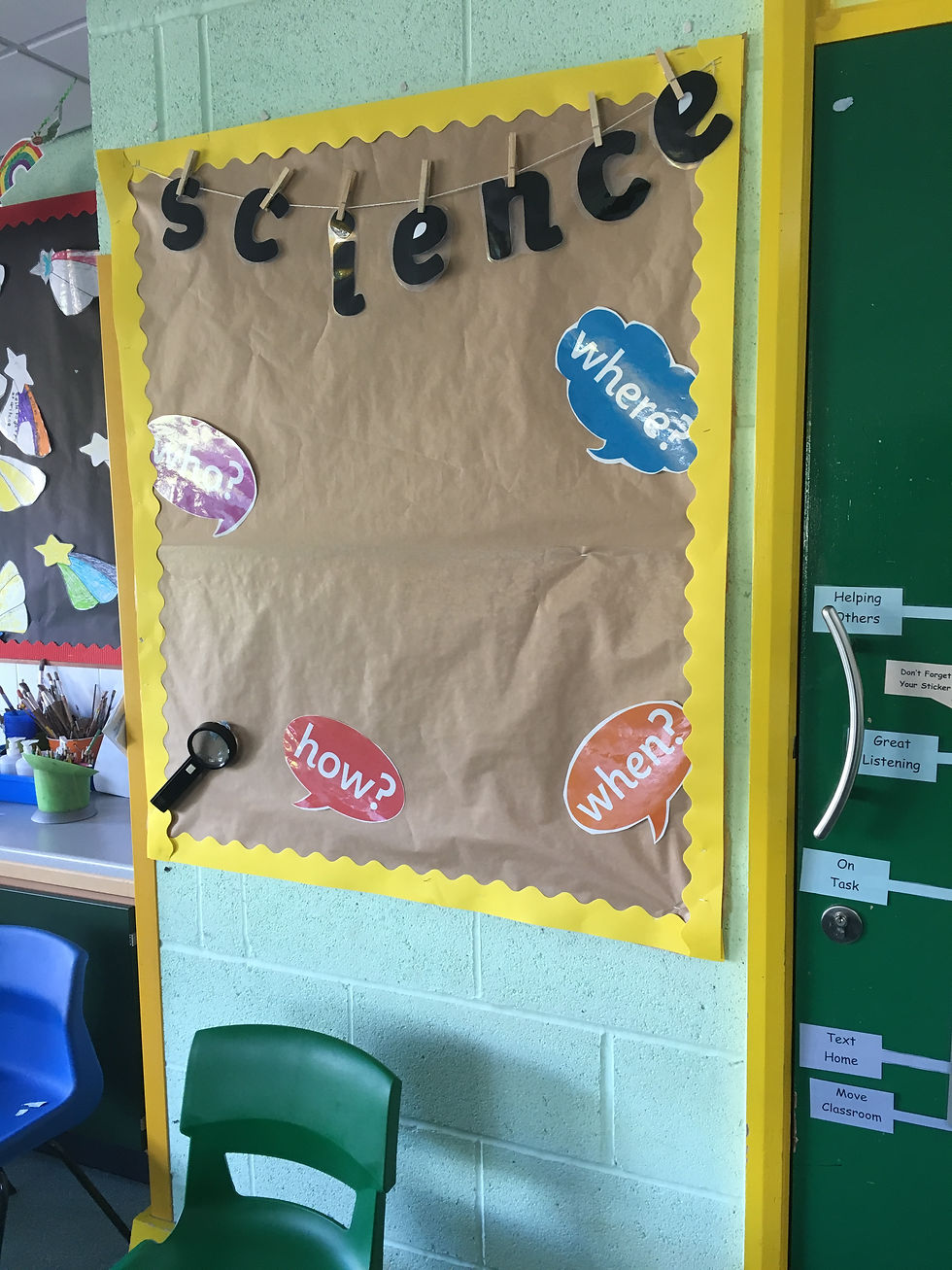
>Can you help me with my display please?- Ask your TA for help with displays. Displays are not precious, do not get precious over your displays! As long as children can see them clearly and it has relevant information on it that is enough. Do not waste your time making them look pretty. If your TA is away on holiday, prepare displays for them to put up when they are at school.
>What table arrangement worked for you?- I am TERRIBLE at table arrangements. I changed my tables all of the time when I was a year 3 teacher. Ask the previous teacher what worked for them and stick with that for now. It worked for them didn't it?
Do you have any resources I could use?- Teachers should share resources to enable a good working environment. Sometimes they will leave you a comfy chair to sit on or a bookstand! Perhaps a bundle of phonics resources that they no longer need....whatever they leave you, KEEP. You do not know that you won't need it so don't be foolish enough to not take it. If you walk in to your classroom and it is bare....is this right? Ask your mentor what you SHOULD be left with and make sure you have it. Do not be duped in to falling short because your'e the new kid on the block! Trust me, it happens!
2 Plan your first week
As an NQT, my first day was a blur! I had spent ages making my classroom perfect, yet when the children walked in to the class I was so nervous I missed important information and crucial bonding time. Before, or even during the summer holidays, get together with your year partner (if you have one) and make a plan. It doesn't have to be perfect and organised to the very minute, it just needs to flow and include important transition and learning points. Click here to download a template weekly plan.
During the first week, use it as an opportunity to familiarise yourself with the classroom, if it flows correctly, GREAT, but if not you can make any adjustments. Make sure you take time to practise your line up routine with the children for assemblies (the last thing you need is your class being the noisiest)! It is also important to practise fire drills and ensure the children and staff (if needed), know where to go and what to do. Plan for this, it is important.
Another useful thing to do is plan a piece of writing. It could be what the children got up to during the holiday! Whatever it is, it doesn't really matter. What you are looking for here is how strong their English and SPAG is. This can be used as a baseline to compare future work and looks good for progress!
3 Don't expect it all to go to plan
During your PGCE year it is all about planning! Everything MUST be on the plan and you should follow it to the best of your ability. Whilst this is important, it is also HUGELY important to understand that often, following your plan, even when it is not going great can actually make you very stressed and it can impact on children's outcomes. Better lessons happen when the teacher understands is able to be flexible in their approach. In order to do this you must have a vision of what you want the children to achieve at the end of the lesson. You must also have a secure subject knowledge about what you are teaching. When I was a student my mentor said to me 'all you need to be is one lesson ahead' - and that has worked for me. Just be 1 step ahead of them at all times.
As well as not going to plan, it is important to know and to realise when this is actually happening. So, the children have been sitting on the carpet, you have followed your plan and it is time for them to all go off to task. You walk around and check and not one child is doing what you have asked. You literally have 2 options here (and I have done both). 1 - Let them carry on...perhaps show them the correct way they should do it individually and hope that they understand....after all it's only 20 minutes left until break time!
2- Stop the whole class. Bring them back to the carpet or group and model again....at a slower pace.
Even though you may find it embarrassing....please opt for 2. If you do not correct misconceptions there and then it will always be a misconception. The sign of a good teacher is one that can reflect in action and make adaptions to their lesson plans to secure good outcomes. Be easy on yourself...the kids will not notice!
4 Be kind to yourself
I wanted to use the title 'do not burn yourself out' but then, I am realistic and I know it happens even when you do not realise you are burnt out. And, how can you STOP yourself from burning out?
During my PGCE year I was hooked on being perfect. If my lesson observations didn't go well I would always focus on the negative. This got me nowhere. I remember I was about to teach a maths lesson to a year 3 class and I just felt sick....What about if I didn't say something right? So much went through my mind, and then there is always the added pressure of other adults in the room. I used to think that they were there to catch me out or just talk about me after the lesson. I got very negative very quickly. As a result, I was stressed and the children did learn...but was it fun? Was I a happy teacher? No to both questions.
I want you to realise that you will never be perfect and there will always be more to do or more you could have done within a lesson. This is the same for every teacher, whether they have been teaching for 2 days or 20 years. trust me, I have worked with some excellent teachers who unfortunately are so stressed by what they haven't done, they've completely missed the fact that they just supported 30 kids learn a completely new concept...like, wow!
Then I have worked with teachers who hold their hands up and say 'I am not perfect.' But they love to help kids learn, they enjoy being with them and having fun. And I feel that this type of teacher is the teacher that is being kind to themselves.
I think, to be kind to yourself as a teacher you must:
> Admit that there will always be more you could do- You could stay up all night and you still wouldn't be finished! Yes your book corner would look amazing, but what good is a cool book corner if there is no teacher to show children how to use it?
> Have a cut off point- During my PGCE/NQT I would work 730am-6pm.Then from 8pm-10pm each day. Then on the weekends I would work Saturday 9am-3pm Sunday 12pm-7pm. You cannot keep this up. I burnt out pretty quick, ended up having time of sick.
After I returned to work I told myself 'just do what you can' so I did 745-6 every day. But I made sure that after school all of my books were marked and my lessons were sorted for the next day.
> Don't take on to much- If you don't want to do it, don't offer. You need your time to evolve as a teacher.
>Spend time with friends and family-Do not become your work. Do not act as if that is the most important thing in your life. If you believe it is, you are wrong. Simple.
> Have a lunch time- Literally, even if it's 10 minutes....get out of that classroom!
5 Enjoy the experience
The teaching profession is ever changing. Lots of people think they know what teachers do, but they don't. What other profession can you be a doctor, nurse, mum, dad, social worker, therapist, play worker, Ancient Egyptian or dinosaur all in one hour?
Most of the time, the only reason I went to my job is because of the children. Don't lose sight of them. Yeah, give them a hug, listen to their stories. Help them with their worries and join in with their games. You are their teacher and they will remember you for a huge part of their lives. Don't forget that you are teaching them the skills that they will rely on in the future. So yes, teaching can be a massive stress but don't let them know it! We need good teachers in the future as well!
I hope you found this blog useful
Share your thoughts?
Laura Brown
Primary School Teacher/Private Tutor
Check out my tuition website. laurabrownie.wixsite.com/hutuition
 |  |  |  |  |  |
|---|---|---|---|---|---|
 |